“What’s it about?“
“What’s it about?”
That’s the question everyone asks when I tell them I’m writing a book. Fair enough, it’s the obvious question, and if I’m to get anywhere in the publishing world, I should probably come up with a succinct and captivating answer. So far, I’ve developed a stock reply: it’s about three things. I’ll try and keep it brief.
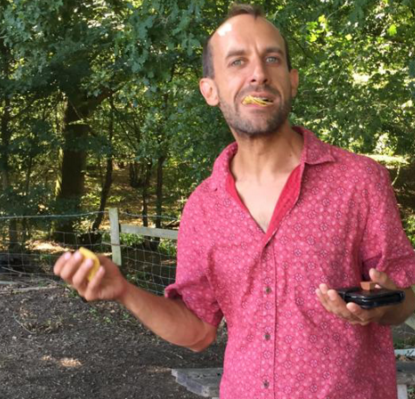
First up, it’s a lockdown novel. It contains most of my thoughts about Covid and my experience of lockdown, including the worries, the paranoia, and the outright weirdness of it all, plus conversely the novelty, the freedom, and the joy I experienced through 2020 on seeing and sharing in the absolute abundance of nature. This is all experienced through my central character, Jon (who is, pretty much, me).
Second, it’s a book about psychotherapy. Or, it’s sort of a book about psychotherapy. Jon has a therapist, anyway. Dr. Ben Hastings isn’t perhaps the most ethical therapist in the world, but Jon doesn’t really know any different, so he’ll have to do.
They say you should write about what you know, and since I’ve been training as a counsellor for three-and-a-bit years, I guess it’s natural that I should be writing about this. But I didn’t actually know that Hastings was going to turn out to be such a prick! Jesus, the man’s nuts. I had no idea how his character would turn out, until I started writing his chapters, and then he just jumped off the page, making me laugh and cower and making me feel guilty and appalled at his behaviour. He’s made me cry a couple of times too, the bastard.
See, that’s the funny thing about this whole process; when I begin writing a chapter, I know what needs to happen in it, and I know where it will happen, and I know who is involved in each scene (I’ll talk more about scenes in a minute), but I don’t really know quite how my characters will feel throughout the chapter yet, or how those feelings will inform their behaviour. And further, I don’t quite know how the people around them will respond to those behaviours. So a lot of the time I’m as surprised as my characters are, and that’s when the writing process gets really exciting – I have to rush to capture the stuff that my characters are going through, while I’m going through it alongside them. And further even still, I have to be mindful of whose point of view I’m expressing – for example, in the parts of the book when Jon’s with his therapist, we see the world through the therapist’s eyes. So if Dr. Hastings says something that upsets Jon (which happens often), I can only write about how Jon feels about it by either describing Hastings’ interpretation of Jon’s emotions (his best guess, which is regularly off the mark), or by making Jon describe, in dialogue, how he feels. Or, I can look inside Jon’s head in a later chapter, and examine how he really felt in that moment. Does that make sense?
I’ve just re-read the above paragraph, and I think it makes sense. Don’t worry, the book is written in a more user-friendly way than some of my sentences here.
Anyway, what was I talking about?
Oh yes! Surprises. Yeah, it’s been quite amazing, launching into this project and meeting my characters for the first time. Phew! I’ll tell you what, the things I know about Dr. Hastings… he would have no clients whatsoever if some of that shit became public.
Mind you, I suppose you’ll find it all out if you read the book when it’s finished so he’d better watch his back.
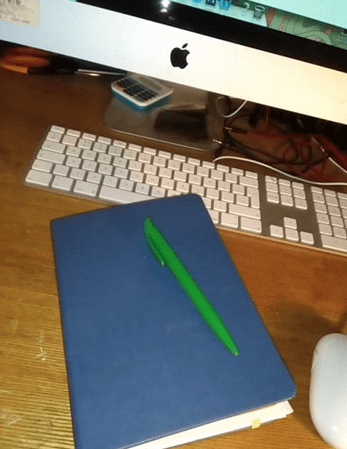
Soooo…. Scenes. I’ll tell you a secret here. I don’t really know how to write a novel. I mean, I’ve read a few, and I can do the whole writing-of-words thing, and I’ve written maybe 200,000 words about counselling over the last few years, and I have a degree, so I know I’m not thick, but… I tried to write a novel sixteen years ago, and it was shit. At the time my sister gave me a book though, to help with it. She found the book in a charity shop and it was called ‘How To Create A Scene.’ I never read it; I just laughed at the title and continued using my tried-and-tested methods of pulling my trousers down in restaurants and shouting at strangers.
What I’m saying is: I don’t know how to create a scene. I’ve never done this before. I’ve never thought about how to purvey the thoughts and interactions of different people in writing, when I’m limited by the point of view of one character at a time.
And I don’t really know how much information my reader needs – does anyone care what Jon is wearing at any given moment, or what the room that he’s in looks like? Surely that’s part of the fun of reading a book – your imagination creates the room, and dresses the character, and combs their hair a certain way.
So it helps, in a way, that I’m writing a book which is set in 2020. it means that there are few social interactions in the story, because Jon lives on his own and for most of the book he’s doing lockdown. I wonder if I’ll ever write another book, and if I do, I wonder how I’ll get on writing more than two people into a room. I think it will be fun, but I might be shit at it, and I might not bother learning to get any better at it. Basically I’m saying don’t bother reading my second book, but please read my first, it’s gonna be good.
Anyway, as I was saying, it’s about three things. Lockdown, Therapy, and…
Third, it’s about an extraordinary miracle in nature. I don’t want to tell you too much about that, because mystery is always fun, but of course this is the aspect of the book which is truly fictional. It’s the bit where I need to make stuff up, from scratch. And would you believe it, this is where I’ve learnt how much bloody research goes into writing a novel! Honestly, I never thought I’d know so much about woodlice. And yesterday I was looking up baby names, and the day before that I watched this mind-bending two-hour YouTube video about consciousness. And the day before that… God knows what I was learning. My internet search history gives us some clues: ‘Baby names that mean Enigma’; ‘Lythium quarry’; ‘Magnifying glass synonym’; and ‘Crustacean single point of evolutionary origin’ are just a few among many queries I’ve made.
I’ve found that this is the part of the book that I’ve been writing most carefully, with the most precision, because this is the area where my readers won’t have a mental gallery of stock-images at their disposal that they can use to flesh out the scenery, so it’s important, for the reader’s sake, that I make sure to describe everything.
And here’s an amazing thing: once I’ve done that, I’ve essentially created a fact. I make something up, I write it down, and now that is part of the framework that you see my fictional world through. So I can build on that, and this is where I discover what my fictional world looks like too. For example, I can tell you early on that a fictional road has a bend in it, and then later on I can rely on the fact that you know about the bend, and then I can tell you that Jon is about to turn the corner and bump into…. Holy shit, who’s it going to be? Or maybe you know who’s around the corner already, but Jon doesn’t have a clue what’s about to happen… I can even decide to leave you hanging there now, and switch to a different chapter. Keep you (and me) guessing for a while. Isn’t that cool? I never knew it would be so much fucking fun writing this!
So that’s pretty cool, and I’ve now forgotten what I was going to write next, so I’ll move on.
As you can tell, a fair portion of what I’m writing is unplanned. I’m improvising. But I do know how my story goes. I know how it ends, and the beginning is written, so the stuff I’m making up is just whatever fits best in between. And that makes it really easy to spot a good idea, out of a field of possibly-good ideas. It’s a bit like when Sherlock Holmes says that the only possible solution to a mystery is the one that can’t not be true. If I think of something that I’d like Jon to do, or to think, or to remember, it’s really obvious to me whether or not that idea fits between the beginning of the book and the ending. So that makes the improvising thing a bit less risky, and a lot more alluring.
A book has a lot of words in it though. I’m about halfway through writing this one, and I’ve hit the 50,000-word milestone this weekend. Yay!
But here’s the thing – once I’ve described my scene, and written about what happens in it, and how the characters feel about that, and blah blah blah, I’m left with loads of free space! And that is just fantastic! It means that I can just write whatever I want, until the next Important Thing has to happen. And I’ve realised that this is what fiction writing is: all you have to do is write about stuff and then make things up to join it all together. Simple.
And by writing all this extra stuff, by going into deeply-focussed detail on Jon’s thoughts, or by dissecting Dr. Hastings’ rationale in any given moment, or by exploring a tangent before swooping back into the room, the book isn’t just about lockdown and therapy and a miracle in nature anymore. No no no, it’s about wayyyy more than that.
It’s a book about self hate. It’s a book about drugs. It’s a book about a confused state of sexuality. It’s a book about fascination. Oh yes, it’s a book about fascination. It’s about lust. Fear, regret, blame, and death, and pain.
It’s also a book about love, and trust, and self-acceptance. It’s a book about consciousness too, and it’s a book about learning to relax. It’s a book about learning to appreciate the world and to indulge in it, fully, and learning to be kind and sincere and to forget oneself, every so often, even if it’s just for a moment.
It’s also got quite a lot of sex jokes in it, and some panic, and some food, and some soft furnishings. And a garden shed, a nail file, and some basic arithmetic. It’s got whisperings of real-life conversations I’ve had, and glimpses of my friends too. In chapter 16, my mate Emz makes a cameo and she’s brought tequila.
…And that’s my succinct reply, to your question.
“What’s it about?”
Erm… Yeah, it’s about lockdown and stuff. Please buy it.
Make a one-time donation directly to Sam
Make a monthly donation directly to Sam
Make a yearly donation directly to Sam
Choose an amount
Or enter a custom amount
Sam loves you very much.
Sam loves you very much.
Sam loves you very much.
DonateDonate monthlyDonate yearly Samuel F Hughes
Can’t wait to read it! And now I want tequilla even though its 7.30 in the morning!
LikeLiked by 1 person
There is no better time than 7:30am 😉
LikeLike