
Hello. Thanks for coming, it’s nice to see you.
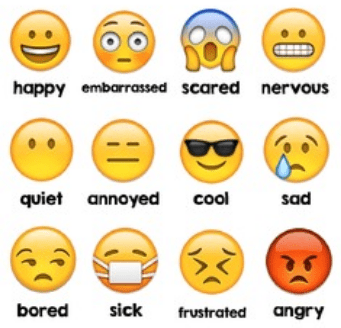
Today I’m going to do a really counsellory thing; I’m going to talk about feelings.
I think it’s really important to do this, but I also know that it’s not the easiest thing to do, because… Well, because often there just isn’t time to talk about feelings, and often it feels sort of indulgent and selfish, and also often it feels a bit like a minefield; sometimes talking about feelings feels a little bit risky, almost like it could lead us to… dangerous places. So let’s see how this goes.
I think we’ve all probably had a thought like this before:
“…If I admit to feeling this thing that I’m feeling, then I’ll open the floodgates and everything will come crashing down…”
And I think we’ve probably all decided, at some point or other, to keep some of our feelings secret – hidden from ourselves even – in order to keep everything eddying along… erm… smoothly. Or at least, in order to keep it all eddying along manageably. Sort of.
Maybe we sometimes hide our feelings so that we don’t upset anyone, or so that we don’t become a burden. Maybe we do it because it’s somehow easier to shovel stuff to the back of our minds than it is to swim through it while we’re trying to make it through each day. Maybe we do it because there’s just too much other stuff happening…
There are lots of possible reasons, but what I’m really saying is that I think we all sometimes deny our feelings so that we don’t have to face them, so that they don’t interrupt our lives, and (most importantly) so that we don’t collapse inwards into a crisis of our own making. So it’s probably a good thing that we don’t talk about our feelings then.
Brilliant.
The end.
Thanks for reading. See you next time.

But wait!
See, the more I work with clients, and the more I try and improve myself, and the more I talk to just about anyone, the more I see that all the denial and the bottling up and the not-saying-things-just-in-case-someone-gets-upset just… Ugh. It just doesn’t work! OK, maybe it works a little bit in the short term, but I’ve come to understand that it’s not really sustainable, it’s not very healthy, and it only really serves to alienate us from our true feelings, and… Well. Let’s think about true feelings for a minute. What even are they?
Humans, it could be argued, are nothing more than a bunch of sensory organs. We’re made solely from skin and eyes and ears and guts and stuff. Yes, we have brains, but I’m becoming ever more convinced that our brains only really process whatever information they receive from our senses, which means we feel our feelings first, and we turn them into thoughts later. And often when we turn our feelings into thoughts, those thoughts make us feel something else… So I kind of think that thinking plays a very small part in our experience of being alive…
…Actually, sometimes I think the only thing we ever really do is feel…
…Which makes our true feelings pretty important really doesn’t it?
So why do we spend so much time denying those true feelings?
Well there’s a question.
I think a large chunk of the answer lies in our upbringing. Let me explain.
We all have an inner parent. This is the tone we take when we tell someone off, or when we look after someone who’s poorly, or when we teach a child something new.
If you have kids you’ll know the voice of your inner parent – it’s a voice that you’ll hear coming out of your mouth every so often – and you may have thought before that it’s kind of… Well, it’s not really your voice. I mean, it is your voice, but the content of it, and the substance of it, and the impetus behind it more often than not all come from your parents, and from characters (both real and fictional) who featured in your childhood. The voice of your inner parent is really an amalgamation of all the parental voices who guided you to safety when you were a child, and get this: quite often they can be pretty damn critical, particularly when we’re talking to ourselves.
Here’s an example:
The phone charger in my car broke recently, and there’s a spare one indoors that I intend to put in the car. That’s all pretty straightforward, and all I need to do is remember to take the spare one with me next time I go to the car. No big deal right? Right.
The only problem is, I keep forgetting.
And then there’s another only problem which is this: every time I forget, I find myself being really rude to me. I get to the car, I realise I forgot the charger, and I say, “Oh you idiot, you forgot the bloody thing again. Fuck sake Samuel. Hhhhhhhh.”
Now… Why do I talk to myself like that?! I would never speak to anyone else that way, but I do it to me all the time. It’s really unfair, especially since I have to spend all my time with me. You’d think I’d be nicer to someone who I had to spend all my time with, but no – I have an inner parent who says the most obnoxious things and puts the highest demands on me for so much of the time.
It’s silly, and I know it’s not my voice. I also know it’s not really the voice of either of my parents, but still it’s a voice that I interjected somewhere along the line when I was young; it’s the product of a collection of voices, from TV and from reality and from books and from school, who all indirectly taught me how to behave when I’m disappointed or frustrated or just plain old pissed off. And in instances like these, they’re no use to anyone. Actually I can’t think of many instances where they would be of any use at all. Yet they’re still here. Weird innit.
And here’s something else, if you’ll allow me to go off on a little tangent for a minute:
Let’s say you’re teaching a child how to tie their laces. You use encouraging words, and you repeat the lesson many times, and you’re patient, even though you might feel a rising frustration at times.
Now consider that you probably learnt the majority (if not all) of those behaviours from whoever taught you to tie your laces. Isn’t that curious?
Curiouser still is this: where did they learn those behaviours? Well, it stands to reason that they learnt them from whoever taught them to tie their laces. And they learnt them from whoever taught them to etc.
It’s amazing – think about this for just a few moments and before you know it you’ve travelled back in time through boundless generations of ancestors and they’re all now queued up impatiently, yelling at your kid through your mouth, telling them to just learn for goodness sake and tie their bloody shoelaces!
Fuck me, aren’t we all a bunch of impressionable idiots?
It gets even more concerning when you realise that this same lesson, passed down through the years, will one day come from your child’s mouth when they teach their child to tie their laces… Blimey. It’s almost enough to make you abandon laces altogether and just stick with Velcro forever instead.
But anyway, it’s all very well having an inner critic, and there’s no escaping the fact that we all have an inner parent, but the problem is that our inner parent’s voice tends to emerge at its loudest and most persuasive when we’re anxious, and it just so happens that when we’re anxious, that’s when most of our defenses come into play….
And guess what one of the most commonly used defenses is…
That’s right: it’s denial.
It’s the same denial as the one that stops us from really admitting to many of our true feelings just in case we upset someone, or in case we become a burden, or in case everything that’s so carefully balanced in place comes tumbling down around us.
It’s the same denial that says, “I’m not comfortable with this feeling so I’m going to pretend it isn’t there.”
And it’s that discomfort – driven maybe by fear of shame or loss of control – that triggers our anxiety further, compounding the denial, and closing us off further from our true feelings. Making us communicate less honestly with others, and making us communicate less honestly with ourselves too.
When I put it like that, it doesn’t sound great, does it? Hmm.
So where are we? I feel like I’m rambling.
Well, essentially we’re talking about talking about feelings. And we’re talking about talking about feelings in a way that doesn’t encourage our anxious inner parent to close the discussion, but in a way that instead encourages our inner level-headed adult to objectively look at our feelings and to just try and understand them, and to accept them for what they are, and to allow them to be there. Y’know; instead of denying them. Instead of pretending they’re not there. Instead of being just a little tiny bit habitually dishonest with ourselves and those around us, just in case we get upset or somebody else does.
I suppose the real question is: when we talk about feelings, does anyone really have to get upset? After all, they’re only feelings. They can’t hurt anyone, unless we allow them to hurt us. And it’s that fear of getting hurt, I think, that triggers the ‘anxious parent response’ which makes us retreat from genuine honesty.
Blimey. This has all gone a bit philosophical.
But hey, imagine getting to a stage in life where you are comfortable with all of your feelings. Imagine how liberating that would be. Imagine being comfortable even with your discomfort. Imagine not being fearful of being fearful. Imagine not being ashamed of shame. Can you imagine how free you’d feel? In all situations? It takes a bit of imagination, but I think it’s possible. Possibly.
And I think, for all the riddlishness of it, it’s possible, possibly, to get closer to this accepting, fearless state through counselling. I really do. I think a good counsellor can help you to understand your feelings, and they can provide a safe forum where all feelings are treated openly, with patience and respect, in order for them to stop feeling so bloody menacing. In order for them to feel more approachable. In order for them to become more talk-about-able.
And here’s the thing: when feelings grow more talk-about-able, that horrible feeling that everything might come crashing down goes away. Life begins to feel less… Flimsy. It starts to take on a solid, structural, tangible form, and in doing so it becomes easier to change parts of it. Counselling has certainly helped me to recognise aspects of my self that I’d accidentally created, that I was totally unaware of, but that I nonetheless regularly relied heavily upon in order to make it through. I’ll be honest: most of them involved denial. Hiding from my feelings. Just in case I either upset someone or everything came tumbling down around me.
Oh, and guess what? Looking back at all the times when I used those denial techniques, I can kind of clearly see that I did quite a lot of upsetting people… Annnnd every so often everything came tumbling down around me too. Pffff. This whole Life thing, sometimes it’s just laughable.
I won’t pretend that I’ve mastered any of this. Today, fleetingly, I fooled myself into thinking that I’m further ahead than I thought, but then I went into Boots The Chemist and I felt very uncomfortable indeed. I have an innate fear of being unwell. I get queasy easily and I find medicine frightening. I find these feelings quite unpleasant, so I employ denial as a means of avoiding them. There’s a raft of other feelings that I use the same strategy to avoid but still, I think I’m getting there. At least I’ve reached a stage where I can laugh about all of it with my counsellor.
Anyway, there we go. I’m not sure if I’ve really said what I set out to say here, but I am proud of the bit where I said ‘Imagine getting to a stage in life where you are comfortable with all your feelings‘. I mean, just imagine it. It’d be good wouldn’t it? Maybe it’s something to aim for.

***
If you’re reading this bit, thank you for making it all the way to the end. I hope you’ve enjoyed reading my words as much as I’ve enjoyed writing them.
I make this blog for free, and I’ll never charge an entry fee. However, if you want to make a donation, please use the buttons below – it’s for a good cause; every penny goes towards my counselling qualification.
You’re also invited to share my posts on social media and among your friends – every share is massively appreciated.
xXx
Make a one-time donation directly to Sam
Make a monthly donation directly to Sam
Make a yearly donation directly to Sam
Choose an amount
Or enter a custom amount
Sam loves you very much.
Sam loves you very much.
Sam loves you very much.
DonateDonate monthlyDonate yearly Samuel F Hughes